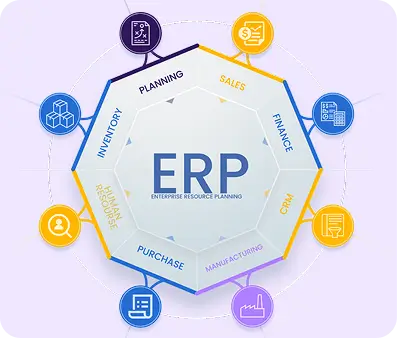
ERP-HR integration is the seamless, bidirectional connection between an organization's Enterprise Resource Planning system and its HR software, enabling real-time data flow across payroll, workforce management, compliance, and talent operations. Here's why it matters in 2026:
- What It Is: A unified data layer connecting ERP and HR platforms so payroll, compliance, and workforce data move in real time without manual reconciliation.
- Why It Matters Now: AI-driven decision-making, hybrid workforces, and tightening compliance rules all depend on clean, connected data that siloed systems cannot provide.
- The Cost of Ignoring It: Research from MIT Sloan Management Review and Gartner shows businesses lose an estimated 15-25% of revenue annually due to poor data quality, much of it rooted in disconnected systems and manual reconciliation.
This guide gives business leaders, HR professionals, and IT decision-makers a clear, actionable framework for understanding, planning, and executing ERP-HR integration in 2026.
ERP vs. HRIS vs. HCM — What's the Difference?
Terminology confusion is one of the biggest barriers to a successful integration strategy. Vendors often use these terms interchangeably, but the distinctions matter.
What Is an ERP (Enterprise Resource Planning) System?
An ERP unifies core business processes finance, supply chain, procurement, manufacturing, and increasingly HR. Platforms like SAP S/4HANA, Oracle ERP Cloud, Microsoft Dynamics 365, and NetSuite serve as the authoritative system of record for financial and operational data.
What Is an HRIS (Human Resource Information System)?
An HRIS stores and manages core employee data records, job titles, compensation, attendance, and benefits. It is the HR system of record, largely administrative rather than strategic.
What Is HCM (Human Capital Management)?
HCM extends HRIS into a full-lifecycle platform for recruitment, onboarding, learning, performance, succession, and offboarding, treating people as strategic assets, not just data points.
How Do ERP, HRIS, and HCM Overlap?
Modern platforms blur these lines deliberately: SAP SuccessFactors is an HCM suite built for SAP ERP; Workday combines HCM and financial management. Knowing where your current tools sit in this spectrum is step one of any integration project.
Why Is ERP-HR Integration Essential in 2026?
Several converging forces have made integration a strategic imperative rather than a nice-to-have.
- AI-Driven Workforce Management: Predictive attrition models, automated scheduling, and skills-gap analytics all depend on clean, unified data flowing across systems fragmented data produces fragmented intelligence.
- Workforce Complexity: Hybrid work, gig employment, and multi-generational teams generate more complex HR data than ever; siloed systems cannot keep pace.
- Compliance Pressure: GDPR, CCPA, PDPA, and evolving ESG and labor regulations demand real-time, auditable data across HR and finance, something only integrated systems reliably deliver.
- Cost of Data Silos: Manual reconciliation between systems adds 2-4 weeks to month-end close cycles and consumes 30-40% of HR teams' administrative time.
- Talent Intelligence: In a tight labor market, organizations that analyze and act on workforce data in real time win the talent competition, impossible without integration.
What Are the Core Components of ERP-HR Integration?
A robust integration synchronizes multiple functional layers across both platforms, not just a single connection point.
Payroll Synchronization
The highest-stakes integration point: compensation, deductions, and benefits must flow in real time into the ERP's general ledger and cost centers. Errors here carry immediate financial and legal consequences.
Employee Records Management
A single source of truth for employee master data personal details, roles, contracts must be maintained across both systems to prevent conflicting records.
Time & Attendance Tracking
Integrating time data with HR (leave, scheduling) and ERP (project costing, labor allocation) ensures accurate billing, payroll, and productivity reporting.
Benefits Administration
Benefits data insurance, retirement contributions, allowances must sync between HR and finance for accurate cost accounting and employee statements.
Talent Management
Performance, learning, and succession data feeds ERP workforce planning models, enabling smarter budgeting and headcount decisions.
Compliance & Reporting
Automated tax filings, statutory submissions, and audit trails require seamless cross-system data access, dramatically reducing non-compliance risk.
Analytics & Business Intelligence
Unified dashboards combining HR and ERP data let leadership track cost-per-hire, revenue-per-employee, and workforce ROI, the layer where integration delivers its highest value.
Top ERP-HR Integration Platforms Compared (2026)
Here's a side-by-side look at the five dominant platforms in the ERP-HR integration space.
| Vendor |
Best For |
Strength |
Weakness |
Gap |
| SAP SuccessFactors |
Large enterprise |
Deep HR modules |
Cost & complexity |
SMB & UX |
| Workday |
Mid-large orgs |
Unified HCM+Finance |
High TCO |
Affordability |
| Oracle HCM Cloud |
Multinationals |
Global compliance |
Steep learning curve |
Usability |
| MS Dynamics 365 |
Microsoft shops |
Native ERP-HR link |
Shallow HCM depth |
Talent mgmt |
| NetSuite |
SMB/Mid-market |
Strong ERP core |
Basic HR features |
HCM maturity |
SAP SuccessFactors
The benchmark for large enterprises in the SAP ecosystem, with deep HCM modules covering the full employee lifecycle. Implementation costs and complexity make it impractical without a dedicated SAP team and enterprise budget.
Workday
A premium unified HCM and financial platform popular with mid-to-large organizations, known for best-in-class reporting. Its total cost of ownership is among the highest in the market.
Oracle HCM Cloud
Excels at multi-country payroll and global compliance, making it ideal for multinationals. Its interface and configuration complexity frequently require dedicated specialist support.
Microsoft Dynamics 365
Offers seamless native integration for organizations already in the Microsoft ecosystem. Its HR module lacks the depth of dedicated HCM platforms, particularly in talent management.
NetSuite
A strong, affordable ERP for SMB and mid-market companies. Its HR functionality is comparatively basic, often requiring a third-party HR platform to close the gap.
Where Do Competitors Fall Short? (Market Gaps & Opportunities)
Even market-leading platforms leave consistent gaps that represent real opportunity for buyers and vendors alike.
- SMB Affordability: SAP, Workday, and Oracle are priced for enterprise budgets, leaving the SMB and lower mid-market chronically underserved.
- UX Simplicity: Complex enterprise platforms demand heavy training and IT dependency; there is real demand for intuitive, self-service interfaces.
- True Mid-Market Fit: The 200-2,000 employee segment is too big for basic tools and too small for enterprise platforms. It needs right-sized, scalable solutions.
- Real-Time Cross-Platform Analytics: Most vendors analyze only their own data; genuine cross-system analytics combining ERP and HR data in real time remains rare.
- AI Transparency: As AI recommendations proliferate, explainable AI where the system shows its reasoning remains a differentiator no major vendor delivers well.
- Change Management Support: Implementations fail on people, not platforms. Vendors offering structured adoption and training support have a meaningful edge.
How to Implement ERP-HR Integration: Step-by-Step Guide
Successful integration follows a disciplined, phased approach. Skipping steps is the most common cause of failure.
Step 1: Needs Assessment
Map current systems, data flows, and pain points. Involve HR, Finance, IT, and leadership from day one.
Step 2: Vendor Selection
Evaluate against your specific requirements: total cost of ownership, timeline, support model, and architecture fit not just feature checklists.
Step 3: Architecture Planning
Decide between point-to-point, middleware/iPaaS, or native ERP-HR modules. Document data flows, APIs, and fallback procedures in detail.
Step 4: Data Migration
Audit and clean data before migration. Map fields, resolve duplicates, and set data governance rules poor migration is the top cause of post-go-live failure.
Step 5: Testing
Run unit, integration, UAT, and load testing on every integration point, especially payroll, compliance, and time-tracking.
Step 6: Training
Deliver role-based training alongside genuine change management communication and engagement matter as much as technical skill.
Step 7: Go-Live & Monitoring
Phase your go-live, monitor performance and adoption intensively for 90 days, and track KPIs to measure success and guide optimization.
How AI and Automation Are Shaping ERP-HR Integration in 2026
AI is now an operational reality reshaping ERP-HR integration, not a future consideration.
Agentic AI
Autonomous AI agents can trigger onboarding workflows, flag compliance risks, and recommend compensation changes in real time, without manual intervention.
Predictive Workforce Analytics
Integrated data enables models that forecast attrition risk, predict hiring needs months in advance, and optimize labor costs against business targets.
NLP Interfaces
Conversational interfaces let employees request payslips, submit leave, or query analytics in plain language — reducing friction and increasing adoption.
Hyperautomation
Combining AI, RPA, and workflow orchestration is steadily eliminating manual HR-ERP processes. According to SHRM's State of AI in HR 2026 report, 92% of CHROs expect AI to become more deeply integrated into HR in 2026 though adoption still trails ambition, with many organizations only beginning to automate core workflows.
What Are the Most Common ERP-HR Integration Pitfalls?
Even well-resourced projects fail for predictable, avoidable reasons.
Legacy System Complexity
Outdated APIs and poor documentation create integration barriers. Solution: audit legacy systems thoroughly before vendor selection.
Data Inconsistency
Conflicting records are the top source of post-integration errors. Solution: invest in data cleansing and master data management before migration.
Poor User Adoption
Technology users don't adopt and deliver no value. Solution: involve end-users early and create internal champions to drive adoption.
Compliance Gaps
Integration can inadvertently break compliance workflows. Solution: map every regulatory requirement and test compliance scenarios in UAT.
Inadequate Testing
Rushed go-lives are the most avoidable cause of failure. Solution: allocate at least 20-25% of project time to thorough testing.
How to Choose the Right Integration Approach
The right architecture depends on organizational size, complexity, budget, and technical maturity.
| Approach |
Best For |
Pros |
Cons |
| Point-to-Point |
Small orgs, 2 systems |
Simple, low cost |
Breaks at scale |
| Middleware/iPaaS |
Mid-market & enterprise |
Centralized, flexible |
Needs IT expertise |
| Native ERP Module |
Single-vendor shops |
No integration overhead |
Vendor lock-in |
Point-to-Point Integration
Direct connections between two systems are simple and low-cost, but unmanageable as more systems are added.
Middleware / iPaaS
Platforms like MuleSoft, Boomi, or Workato centralize integration across multiple systems, offering flexibility and reusable connectors at the cost of IT overhead.
Native ERP Module
Using the HR module built into your ERP eliminates integration overhead but creates dependency on a single vendor's roadmap and pricing.
Decision Framework
Ask: how many systems need to connect, what real-time data is required, what is your IT team's capability, and what budget is available. The answers determine the right approach: iPaaS suits most growing mid-market organizations, while native integration fits single-vendor enterprises.
Why ERP-HR Integration Is a Business Priority in 2026
ERP-HR integration in 2026 is a business transformation initiative, not just a technology project. Organizations that connect their HR and ERP systems gain a measurable edge: faster decisions, lower costs, stronger compliance, and a more engaged workforce.
The key takeaways: understand your ecosystem before selecting tools, evaluate vendors against your specific needs, follow a disciplined implementation approach, and never underestimate change management. As AI and predictive analytics become embedded in both ERP and HR platforms, the integration layer connecting them will only grow more critical.